There’s a word for everything in German – it’s because you can simply describe something and join up all the words. Or, you think about a particular feeling or set of circumstances and attribute it to something tangible to make a word. Examples include Kummerspeck, Frühlingsgefühle, and Geborgenheit.
I mention the interesting words because one of my favourites (as a word and a concept) is Kunstkammer, which translates as a ‘cabinet of curiosities’. These cabinets have a long history, and were essentially collections of ‘curious items from home or abroad’, usually with a nature focus (obviously collecting bits of nature for personal viewing is frowned upon these days!). When I lived in Germany, my host family had a small Kunstkammer in their house, but I didn’t come across another one until I met a woman twenty years ago who had been a vet – her cabinet filled a whole wall and was carefully curated – it was amazing to look at.
This is all a very long introduction to An Inventory of Losses by Judith Schalansky (translated by Jackie Smith). The book is a literary version of a Kunstkammer. Schalansky describes twelve ‘objects’, including a species of tiger, a villa in Rome, a silent movie, an encyclopaedia in a forest, and the Palace of Republic in Berlin – that share a common fate: they no longer exist, and all we have to record their existence is a paper trail, or an art work that has a reference to the lost object.
Obviously the central theme is extinction and loss, but the individual stories also prompt thinking about how we value things, the notion of memory, and how history recasts what is important at any one time. Schalansky plays with form – this is essentially a nonfiction book, certainly of the narrative nonfiction variety, however she blurs the line with some chapters where scenes and conversations are almost certainly fictional.
The preamble and preface to An Inventory of Losses is superb – mesmerising, thought-provoking, rich.
…the demise of all life and endeavour is a condition of its existence.
Unfortunately, the individual stories about the objects were uneven, and some I simply wasn’t invested in. But some I loved, especially the essay about Tuanaki, an island that has disappeared from the Southern Cook Islands cluster, and the essay titled The Love Songs of Sappho, which explored the poetry of Greek poet, Sappho, around 600 B.C. As Schalansky reports, it is estimated that only 7% of Sappho’s poetry remains –
Wordless, blind understanding is as much a firm topos of love poetry as is the wordy evocation of unfathomable feeling.
Sappho’s influence, although her remaining words are only fragments, have continued to reverberate, particularly in grammatical conventions –
We know that words and symbols change their meaning. For a long time, three dots in a row along the writing baseline designated something lost and unknown, then at some point also something unuttered and unutterable; no longer only something omitted or left out, but also something left open. Hence the three dots became a symbol that invites one to think the allusion to its conclusion, imagine that which is missing, a proxy for the inexpressible and the hushed-up, for the offensive and obscene, for the incriminating and speculative, for a particular version of the omitted: the truth.
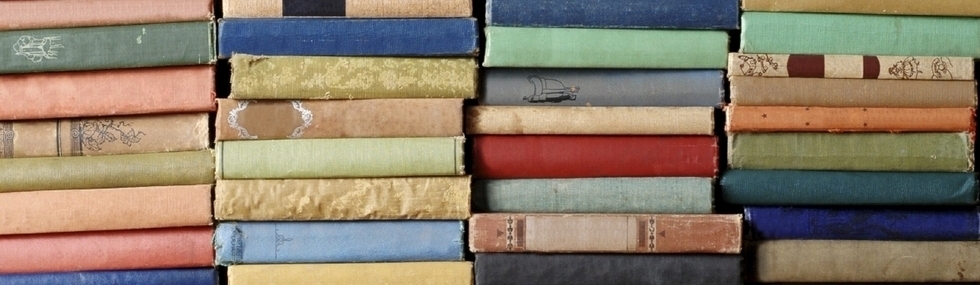
I have a hardcover copy of this book – it’s a beautiful book to hold, and for that reason it will stay on my shelf.
3/5
I love asparagus. Until I lived in Germany in the late-eighties, I had never seen white asparagus – it’s available here now as a seasonal specialty – but interesting that in what was then East Germany, it was the green asparagus that was considered the delicacy.
She laid the asparagus spears one after the other on a dry tea towel.
“Queued up for asparagus, too, did you?” He took his hands out of his pockets, folded his arms and grinned broadly. She couldn’t help laughing. She was not the only one pinching asparagus from the field behind the allotments. Green asparagus. She had never once seen it on sale in the shop. Rumour had it that it all went straight to Berlin, to the Palace of the Republic.

Pingback: German Literature Month XIV | booksaremyfavouriteandbest
What a great word! I remember having a shadow box as a child that hung on the wall to hold curios (mainly seashells) and ornaments. I used to love adding to it and rearranging objects in each of the little compartments.
It sounds like this book would make a nice companion piece to Yoko Ogawa’s Memory Police which is about things disappearing from our collective conscience.
I had a shadow box as well, and like you I was always rearranging my little treasures.
I’ll have to check out Memory Police. Sounded familiar but when I had a look on Goodreads I realised that I hadn’t read it. Inventory of Losses also brought to mind Georgi Gospodinov’s Time Shelter.
I made a shadow box in woodwork at school. Mum was very good about using things we made. I’m sure the shadow box hasn’t survived but she does still have a chopping board I made, now completely hollow in the centre.
Kate, The Memory Police is excellent.
The chopping board you made must have been well-crafted to still be going! I made one in woodwork which served its purpose for many years but eventually fell apart. My son made me one, which is doing well so far (although he is a much better craftsman than I ever was, despite my enthusiasm for woodwork).
This sounds a really interesting premise, I can see it would be hard to sustain the consistency though.
I think the main problem was the occasional veering into fiction – makes it difficult to know which bits to believe! Nevertheless, I am keen to read her other book about lost islands.
How interesting that the preface is the best part? Excellent review.
In fairness, it’s a long preface that really sets the tone for the rest of the book.
Pingback: #NovNov – two very different novellas | booksaremyfavouriteandbest
Pingback: German Literature Month XIV Author Index – Lizzy’s Literary Life (Volume 2)