


Sometimes you leave a review so long that there hardly seems any point… Almost the case with these books, so I’ll mention just a few reasons why I enjoyed them –
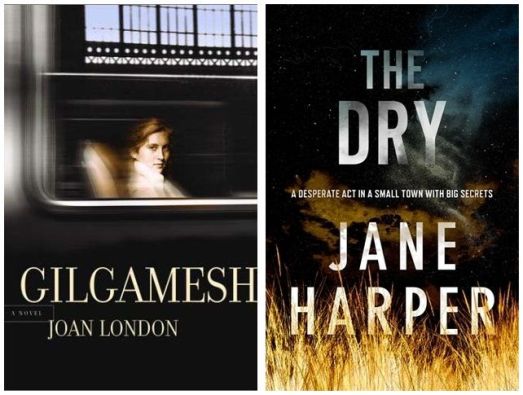
Gilgamesh by Joan London
Can you have a ‘compact saga’? If so, this is it. Not so much the reworking of an epic quest but more a reflection of its spirit. In Gilgamesh we meet travellers from faraway lands (Armenia and Australia); find and lose love; face battles of many different kinds; and play with the meaning of ‘home’.
London’s carefully crafted sentences are completely immersive. From simple descriptions – a ‘…star crammed window…’ to passing observations – ‘Poverty always subdued her’, there is not a single extraneous word in this story and yet the overall effect is rich and abundant. How does she do it? I don’t know but it makes for immensely satisfying reading. And while the sense of place and time was beautifully done, it was the subtle but telling snippets on relationships that lingered – ‘Without a father you had no youth’ and ‘Her mother had fallen into silence here a long time ago, it was her silence Edith heard in every moment’ and ‘That is how it is with sons, they are beautiful strangers’.
Read Gilgamesh for the heroine alone – her fearlessness, capacity for love and wanderlust is epic.
4/5 Superb.
The Dry by Jane Harper
I rarely read crime and/or thrillers because I’m usually disappointed. Something that author Rosalie Ham once said made me alert to crime-writers’ tricks and I’ve been hyper-aware ever since (if you want to know, look for the * at the bottom of this post. Just know that it might spoil some books for you!).
So, crime and thrillers first need to pass what I now call the ‘Ham test’. Most don’t but Jane Harper’s, The Dry, did. It moved along at a clip (as opposed to constant mini-cliffhangers and drawn-out suspense); it didn’t have me thinking ‘Well, that was convenient…’; and it was well-written and wonderfully atmospheric – in short, gripping.
4/5 The perfect page-turner.
* Ham said that as soon as a character says something like “I love her” within the first few pages, you know ‘she’ is dead. As a result of this throwaway comment from Ham, I’m usually trying to solve crimes within the first ten pages of a book.